dimanche 26 mai 2013

What is Mesothelioma ?
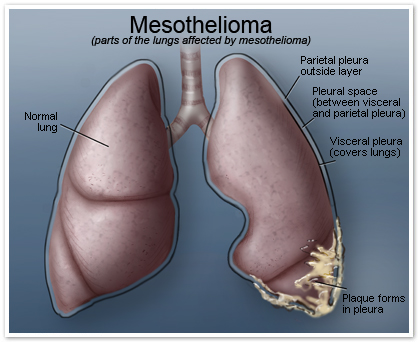
What is Mesothelioma ?


Mesothelioma is a cancer of the mesothelium; the protective sac that covers and protects most internal organs of the body. The mesothelium has two layers, one, which covers the organ, and a second, which forms a sac around it. The mesothelium has different names depending on the location in the body. The pleura is the name for the mesothelial tissue surrounding the lungs and lining the chest cavity. The peritoneum covers most of the organs in the abdominal cavity, while the pericardium covers and protects the heart.

The mesothelium produces a lubricating fluid that allows organs within it to move and glide easily. The fluid allows the lungs to breathe and the heart to expand and contract without creating any type of internal friction.

Like other forms of cancer, mesothelioma occurs when cells become abnormal and divide or grow out of control. When someone has mesothelioma, the helpful lubricating fluid described above may be over-produced. This excess fluid encases the organs with a thick layer of tumor tissue, described as a rind type of layer. In advanced cases of mesothelioma, cells metastasize, or grow and invade other organs and spread to other areas of the body.

The majority of individuals suffering from mesothelioma have cancer in the lining of the lung. Sometimes, mesothelioma occurs in the lining of the abdominal cavity (peritoneal mesothelioma) or in the lining of the heart (pericardial mesothelioma).

The symptoms of mesothelioma are common to a number of illnesses which means that mesothelioma is difficult to diagnose. Unique types of treatment for mesothelioma are still being investigated through clinical trials and research, but as a general rule, mesothelioma does not respond well to most treatments that are currently being offered.

Mesothelioma is caused by breathing or ingesting asbestos fibers. The coarse fibers cause scarring of the mesothelial tissue which can cause asbestosis or pleural plaques. Unfortunately, the scarring can also lead to cancer known as mesothelioma.

It often takes 20 to 50 years after exposure to asbestos before the symptoms of mesothelioma develop. This period of time is referred to as a latency period. Because of the latency period, the disease commonly affects men and women that are at least 50 years of age and that worked with asbestos between 20 and 50 years ago. Many workers working 20 to 50 years ago did not use any type of protection in the workplace while they were exposed to the dust or fibers from asbestos. At the same time, however, many of the companies employing the workers had full knowledge that asbestos was dangerous and that exposure to asbestos would harm the health of many of the workers. Insulators, plasterers, electricians, pipefitters, mechanics, ironworkers, ship builders, ship workers, brick layers, carpenters, and other tradesmen are just a few examples of workers that were likely to work with asbestos on a day-to-day basis. Also at risk are the families of these workers, as the asbestos fibers may be brought into the home from the clothes, skin, or hair of the worker.

If the mesothelioma is detected in the earlier stages and treated aggressively, studies have shown that half will survive two years and 20 percent will survive five years. However, if the diagnosis is for Advanced Mesothelioma, only 10 percent have a three-year survival rate and only 5 percent have a life expectancy of five years.

Keep in mind that these statistics should only be used as general guidelines, and not as a definitive idea of an individual patient's survival rate. Patients are encouraged to speak with their physicians about their individual prognosis.

Unfortunately, millions of people have been exposed to asbestos over the years. Only now are we able to see the disastrous effects of asbestos exposure in the workplace.

As with other cancers, a speedy diagnosis is important to effective treatment of mesothelioma. If you believe that you may have mesothelioma and that you worked with asbestos in the past, you may wish to inform your doctor of this fact.

WHAT ARE YOUR LEGAL RIGHTS?

If you or a loved one have been diagnosed with mesothelioma in the last five years, you may wish to meet with an attorney to discuss your legal rights. Anyone who has been diagnosed with mesothelioma should consider this option. If you have a loved one who is deceased because of mesothelioma, their spouse or an executor of the estate should also consider legal representation.

There are different avenues to consider regarding representation and the possibilities of obtaining compensation. We believe it is important that you choose representation by a firm that is exclusively devoted to mesothelioma claims. We believe you should choose a firm that has years of experience and a proven track record with mesothelioma claims.

Patricia Hughes works for an Internet marketing firm ePlus Marketing
For more information contact: Maune Raichle Law firm 1-800-358-5922.
The firm specializes in mesothelioma cases. Or go to: legal-mesothelioma-help.com


Article Source: http://EzineArticles.com/579785


Types of Mesothelioma

Types of Mesothelioma


Mesothelioma is a rare type of lung cancer. The main cause of mesothelioma is exposure to asbestos fibers. There is a long time gap, sometimes even up to 30 years, between exposure to asbestos and the start of the disease. It is also very difficult to diagnose this disease because the symptoms are very similar to other benign diseases like pneumonia.

Mesothelioma is a disease that affects the mesothelium or lining that forms a protective layer around the abdomen, lungs, heart and some few other parts of the body. The mesothelium cells divide rapidly during this disease. Also these cells have longer life spans and overgrow. This abnormal development of mesothelium cells is caused due to exposure to asbestos fibers. People who have worked in asbestos industries or lived around asbestos industries and their families are more prone to get this disease. After sometime, this may even affect the other parts of the body.

There are three main types of mesothelioma. It is called as pleural when it affects the lungs, peritoneal when it affects the abdomen and pericardial when it affects the heart. Around 75 % of mesothelioma cases are pleural and 20% are peritoneal or pericardial. There are also some other rare types of mesothelioma that affect the remaining 5%. All these statistics pertain only to the documented cases. There are thousands of cases that go undocumented or undiagnosed all around the world.

Pleural Mesothelioma:

Among the various types of cancer, mesothelioma accounts for only a small percentage. However, among the various types of mesothelioma, pleural mesothelioma accounts for nearly three-fourth of the documented cases. In pleural mesothelioma, fluid gets built up between the chest and the mesothelium lining.

Symptoms:

The symptoms of this disease include panting, shortness of breath, fever, loss of weight, coughing up blood and breathing difficulties. Patients of pleural mesothelioma face acute chest pain. Since the symptoms of this disease are similar to pneumonia, it is often confused with this disease. The diagnosis is also difficult. There is no known cure for pleural mesothelioma. There are two types of pleural mesothelioma - cancerous and non-cancerous. When it is cancerous, it is called as a malignant form and when it is non-cancerous, it is called as a benign form.

The latency period of mesothelioma is around 20 to 50 years. This makes it very difficult for many people to link the disease to asbestos exposure. They might have changed many jobs by this time and may not consider their disease as an occupational type of disease.

Pleural mesothelioma is caused by the inhalation of asbestos fibers. These fibers enter the lungs through the nose or mouth and they settle in the lungs. Then, they travel through the tissues. Since they are light and invisible, they become easily airborne and inhalable. When the asbestos fibers settle in the mesothelium lining, the mesothelium cells start showing abnormal behavior, thereby leading to mesothelioma. In this disease, tumors are formed in lungs and mesothelium and this may also spread to other parts of the body too.

Since they are difficult to detect, they might have caused maximum havoc by the time they are detected. Mostly, when mesothelioma is detected, the patients are in the final stages of cancer with only a few months or years left. Sometimes, not even that. Mesothelioma is a terrible killer disease. Proper tests and efforts must be taken by the medical fraternity to detect the disease as soon as possible.

Peritoneal Mesothelioma:

Peritoneal Mesothelioma is a very rare disease. Around 10-20 % of the documented mesothelioma cases are diagnosed with peritoneal mesothelioma. This type of mesothelioma affects the abdomen of the patient. The mesothelium cells of the abdomen behave abnormally in this disease. This disease is also caused by the oral inhalation of asbestos fibers. The fibers travel through the entire digestive tract and settle in some part of the digestive systems. The mesothelium lining in that part starts dividing rapidly and the cells also have longer life spans. This causes tumors in the abdomen and this may also spread to other parts of the body. The main symptoms of peritoneal mesothelioma are severe abdominal pain, nausea, vomiting, constipation, fever, chest pain, loss of weight and breaking difficulties. Loose motions or constipation, a swollen stomach and chunks of tissues in the abdominal area are classic signs of peritoneal mesothelioma. The disease is diagnosed in several ways using x-rays, IT scans, MRI, PET, Laparoscopy, Laparotomy, Thoracotomy and so on. The main risk factor for contracting this disease is exposure to asbestos fibers, and asbestos dust. However some of the following factors also increase the risk of contracting this disease:

    A family that has a history of cancer i.e. hereditary risk factors.
    A smoker seems to have a higher chance of contracting the disease as compared to a non-smoker, who has had the same level and amount of exposure to asbestos fibers.
    Zeolite is a mineral which has properties very similar to asbestos and also seems to be as hazardous as asbestos.
    Thorium dioxide used in x-rays is also a trigger factor for cancer.


Pericardial mesothelioma:

The most rare form of mesothelioma is the pericardial mesothelioma; it affects the mesothelium linings of the heart. The main symptoms of pericardial mesothelioma are chest pain, breathing difficulties, fever, palpitations, tiredness and cough. Like all other types of mesothelioma, there is no cure for this type also. The only thing that doctors can do is to reduce the pain and discomfort of the symptoms and help the patients have a comfortable and peaceful death.

The pericardial lining of the heart is removed to reduce the symptoms. The heart is the most fragile part of the body. It is covered with an even fragile lining called pericardium. That is why this disease is called as pericardial mesothelioma as it affects the pericardium. The earliest symptoms are tiredness, chest pains, heart palpitations, breathing difficulties and persistent cough. Since these signs are common to other heart problems, it is difficult to diagnose this disease. Slowly, the heart lining starts thickening and fluids start filling the heart. It may also spread to other organs of the body.

In the later stages of pericardial mesothelioma, the patient finds it very difficult to consume any food or liquids. The lungs stop functioning gradually and the obstruction in intestines becomes more prominent. The heart condition worsens and the patient may be affected by a stroke or heart attack. Death becomes the solution and salvation that the mesothelioma patients crave for. The persons most likely to get this disease are those who face constant exposure to the risk factors like

    Shipyard workers
    Asbestos industries' laborers and miners.
    Zeolite industries' laborers and miners.
    Construction site workers.
    Fire poof materials manufacturers
    Cement mixers
    Painters

Not only the above groups of people are having a high chance of contracting the disease but also their families run a risk of contracting this disease. The workers when they return home carry the asbestos dust and asbestos fibers in their clothing and their families may be exposed to the disease. The workers should take the following precautionary measures:

    They should wear protective clothing to work.
    They should change their dresses and wash up before they leave for home.
    An expert should be hired to detect if there is any asbestos in the residence and nearby environment.

Article Source: http://EzineArticles.com/720772


Malignant Mesothelioma Diagnosis

Malignant Mesothelioma Diagnosis


The most critical form of mesothelioma is the malignant form. Known as malignant mesothelioma, the primary causal factor is asbestos infection. According to the US National Cancer Institute, "Malignant mesothelioma is a disease in which cancer (malignant) cells are found in the sac lining the chest (the pleura), the lining of the abdominal cavity (the peritoneum) or the lining around the heart (the pericardium)."

Mesothelioma can be classified into three types - pleural mesothelioma, peritoneal mesothelioma and pericardial mesothelioma. Pleural mesothelioma refers to a cancer of the lining of the lung (pleura), peritoneal mesothelioma refers to a cancer of the abdominal cavity (peritoneum) lining, and pericardial mesothelioma is a cancer that occurs in the lining that surrounds the heart (pericardium). The subtypes of mesothelioma are of three basic types, one very aggressive, one least aggressive, and one lying between the two extremes.

Malignant mesothelioma can be diagnosed through several imaging techniques. These imaging techniques enable physicians to assess mesothelioma. Once mesothelioma is suspected, patients are advised to undergo several tests, like X-ray, Computed Tomography (CT) scan, Magnetic Resonance Imaging (MRI) scans, and Positron Emission Tomography (PET) imaging. The physician may also like to undertake special mesothelioma tests like thoracoscopy, peritoneoscopy and biopsy.

Learning about the stage of mesothelioma is a critical factor that helps physicians to decide the treatment plan. If the cancer is confined to the pleura, mesothelioma is considered localized. If the cancer spreads beyond the pleura and to other parts of the body such as the lungs, abdominal cavity, lymph nodes and the chest wall, mesothelioma is considered to be in an advanced stage.

The oft used and the oldest system for determining the stages of mesothelioma is the Butchart System. The Butchart System is based on the extent of the primary tumor mass available in a patient. This system divides mesothelioma into four stages. The TNM system, a slightly advanced system over the Butchart System, determines staging through variables of tumor in mass and the spread, the lymph node involvement and metastasis. However, the latest system is known as the Brigham System, where staging is done as per the respectability and lymph node involvement. In spite of such modern techniques, a definitive diagnosis of mesothelioma still remains possible through fluid diagnosis and tissue biopsy.

Mesothelioma Diagnosis [http://www.WetPluto.com/A-Guide-To-Malignant-Mesothelioma-Diagnosis.html] provides detailed information on Mesothelioma Diagnosis, Malignant Mesothelioma Diagnosis, Mesothelioma Diagnosis Support, Mesothelioma Doctors and more. Mesothelioma Diagnosis is affiliated with Mesothelioma Asbestos Diseases [http://www.WetPluto.com/Asbestos-Mesothelioma-Cancer.html].


Article Source: http://EzineArticles.com/206726


All About Mesothelioma Risk

All About Mesothelioma Risk


Mesothelioma is a type of cancer which is considered to be very rare. This type of cancer occurs in protective lining, which is responsible for covering internal organs of the body called Mesothelioma. There are basically 3 types of Mesothelioma:

    Pleural Mesothelioma
    Peritoneal Mesothelioma
    Pericardial Mesothelioma

Pleural Mesothelioma

Among all different types of Mesothelioma, pleural Mesothelioma is the most common one. More than 70% people are suffering from this type. Pleural Mesothelioma attacks on the lungs.

Peritoneal Mesothelioma

This type of Mesothelioma cancer occurs in the peritoneum. It attacks towards the abdominal cavity. However, it is less common as compared to the pleural Mesothelioma.

Pericardial Mesothelioma

This type of Mesothelioma cancer occurs in pericardium and attacks at the heart. However, this type is least common.

The main recognized cause of this disease is Asbestos. It works in such a way so that the people who are exposing to the asbestos will develop the symptoms of Mesothelioma in upcoming future and not immediately. Many experts often suggest that the smokers are more vulnerable to Mesothelioma.

Symptoms of Mesothelioma:

Most of the patients of Mesothelioma do not notice any kind of symptoms in the earliest stages/months. Mesothelioma can only be detected by the regular medical checkups. Also many people confuse with the symptoms of Mesothelioma with the regular and common ailments. The symptoms of pleural Mesothelioma are:

    Fever
    Back pain
    Chest pain
    Muscle weakness
    Weight loss
    Fatigue
    Breath shortness
    Decrement in sensory capabilities
    Swallowing trouble in arm and face
    Hoarseness
    Coughing up blood
    Continuous cough

The main symptoms of peritoneal Mesothelioma are:

    Creation of fluid in abdominal cavity
    Abdominal pain
    Vomiting
    Nausea
    Weight loss

The main symptoms of pericardial Mesothelioma are:

    Night sweats
    Fever
    Trouble in breathing
    Chest pain
    Irregularities heartbeats
    Heart palpitations

Mesothelioma risk factors:

One of the most common risk factor of Mesothelioma is asbestos exposure. People who work in the place surrounding asbestos are more vulnerable towards Mesothelioma. Also the people who are exposed to the thorium dioxide are also vulnerable. Some experts also suggest that x-ray substances or also responsible for peritoneal and pleural Mesothelioma. People who are constantly in touch with Zeolite are also at a great risk. Zeolite is a mineral which is mostly found in Turkey's Anatoli region. Some medical experts also believe that there is a connection between the simian virus 40 and Mesothelioma. However, cases are still debatable. Tobacco, which is said not to be a direct responsible for this disease but the combination of the people who consume it and people who works in surrounding of asbestos are 50% more vulnerable to Mesothelioma.

Though Mesothelioma cancer is a rare type of cancer, but it doesn't mean that it is any less dangerous. As of now there is no proper cure for Mesothelioma and the problem with this disease is people are not able to find it in the early stages. This disease mostly takes the life of the people in just 2 years. The only key by which you can fight with this type of disease is to regularly go for doctors for diagnosis.

Thanate Tan is a contributing member to SuperGhostBlogger.com, helping online business reach their goals via Internet Marketing. Super Ghost Blogger can help blog owner maintain their blog by professional Ghost Blogger. With active blog, it will bring many benefits to business that want to famous.


Article Source: http://EzineArticles.com/5424327


Choosing a Mesothelioma Doctor

Choosing a Mesothelioma Doctor - Tips For Finding the Right Doctor After a Mesothelioma Diagnosis


After you or a loved one has been diagnosed with mesothelioma, choosing which mesothelioma doctor you will trust your care to is one of several important decisions that must be made. The tips below offer guidelines for finding a mesothelioma doctor who can meet your needs, ensure that you get the best possible care, and help you through this difficult time.

Tip 1: Find a Doctor who has Experience Treating Mesothelioma and Asbestos Exposure Cases

Mesothelioma cancer is a relatively rare disease and not all doctors are knowledgeable regarding asbestos exposure, diagnosing mesothelioma, and the types of mesothelioma treatment. It is important for mesothelioma patients to find a doctor who has experience treating patients with this disease, particularly if they are interested in exploring some of the newer and non-traditional forms of mesothelioma treatment. There are several ways that you can find mesothelioma doctors, including the following:

    Ask your primary care physician to refer you to a mesothelioma specialist
    Contact an organization such as the Mesothelioma Applied Research Foundation or the American Cancer Society and ask if they can provide assistance
    Ask any friends, family members, or coworkers who have dealt with a mesothelioma diagnosis if they can recommend a doctor.

Remember that every mesothelioma case is different and every patient has their own unique set of needs and concerns. You may have to consult with several mesothelioma doctors before you find one that you are comfortable with.

Tip 2: Ask the Right Questions

Before choosing a mesothelioma specialist, you should talk to the doctor and ask questions in order to learn about his or her background and qualifications. This can also help you get a sense of the doctor's personality and character. Listed below are three key questions that you should ask a mesothelioma doctor that you are considering going to for treatment:

    How many cases of mesothelioma cancer have you treated in your career?
    What kind of specialized education, training, and certification have you received related to mesothelioma and asbestos cancer?
    What kinds of mesothelioma treatment options can you provide?

It is important to find a mesothelioma doctor who you trust to provide the highest level of care possible. You need to be comfortable communicating with your doctor about any questions or concerns you may have regarding your mesothelioma treatment. It can be very helpful if your family has a good relationship with the doctor as well, particularly if your family members are taking an active role in your treatment.

Liz Ryan is a Writing and Content Specialist for IQ Mesothelioma. Visit IQMesothelioma.com to learn more about Choosing a Mesothelioma Doctor and search our national mesothelioma doctor directory to find a mesothelioma specialist in your area.

Article Source: http://EzineArticles.com/3835323


Mesothelioma Treatment Web Sites

Mesothelioma Treatment Web Sites


Mesothelioma is an unusual form of cancer of the mesothelial cells that line the lungs, heart and the stomach. In recent times, in the U.S, there has been an alarming rise in the occurrence of mesothelioma cases mainly caused by exposure to asbestos. Mesothelioma that develops in the lining of the heart is known as pericardium mesothelioma. When found in the sac that lines the chest or abdomen, it is called malignant mesothelioma. Asbestosis is a chronic lung ailment that produces shortness of breath, coughing and even permanent lung damage. Many treatment programs for mesothelioma have been initiated with a purpose of curbing or curing the disease. There are a number of Web sites that provide information on various treatments of mesothelioma.

Mesothelioma treatment depends on many factors that include the various stages of cancer, location, state of cancer, appearance of cancer cells and the patient?s age and requirements. Web sites on mesothelioma provide information on the different types of treatments including traditional care for malignant mesothelioma. This involves surgery that removes the cancer, chemotherapy that uses drugs to fight the cancer, and radiation therapy that uses high-dose x-rays or other high-energy rays to kill cancer cells.

Certain Web sites provide useful articles on experimental therapies for mesothelioma treatments, which include usage of the drug Alimta. They feature articles on various clinical trials and research studies that promise new or experimental mesothelioma treatments. These Web sites list typical treatment strategies based on different stages of mesothelioma.

Generally, Web sites of top cancer centers for mesothelioma treatment are listed alphabetically by state and are of great convenience to patients. People can register themselves online and consult top experts who after verifying their problem through a questionnaire, advice on appropriate drugs that help to cure mesothelioma. Many Web sites also provide information on victims of mesothelioma and their families. Patients of mesothelioma can share their experience with them and get emotional support. On the whole, mesothelioma treatment Web sites offer a great source of information that creates awareness about diverse treatment options available for mesothelioma.

Mesothelioma Treatment [http://www.WetPluto.com/Alternative-Mesothelioma-Treatment.html] provides detailed information on Mesothelioma Treatment, Mesothelioma Treatment Options, Alternative Mesothelioma Treatment, New Mesothelioma Treatment and more. Mesothelioma Treatment is affiliated with Mesothelioma Doctors Info [http://www.e-mesotheliomadoctors.com].


Article Source: http://EzineArticles.com/407992